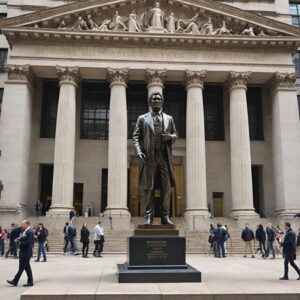
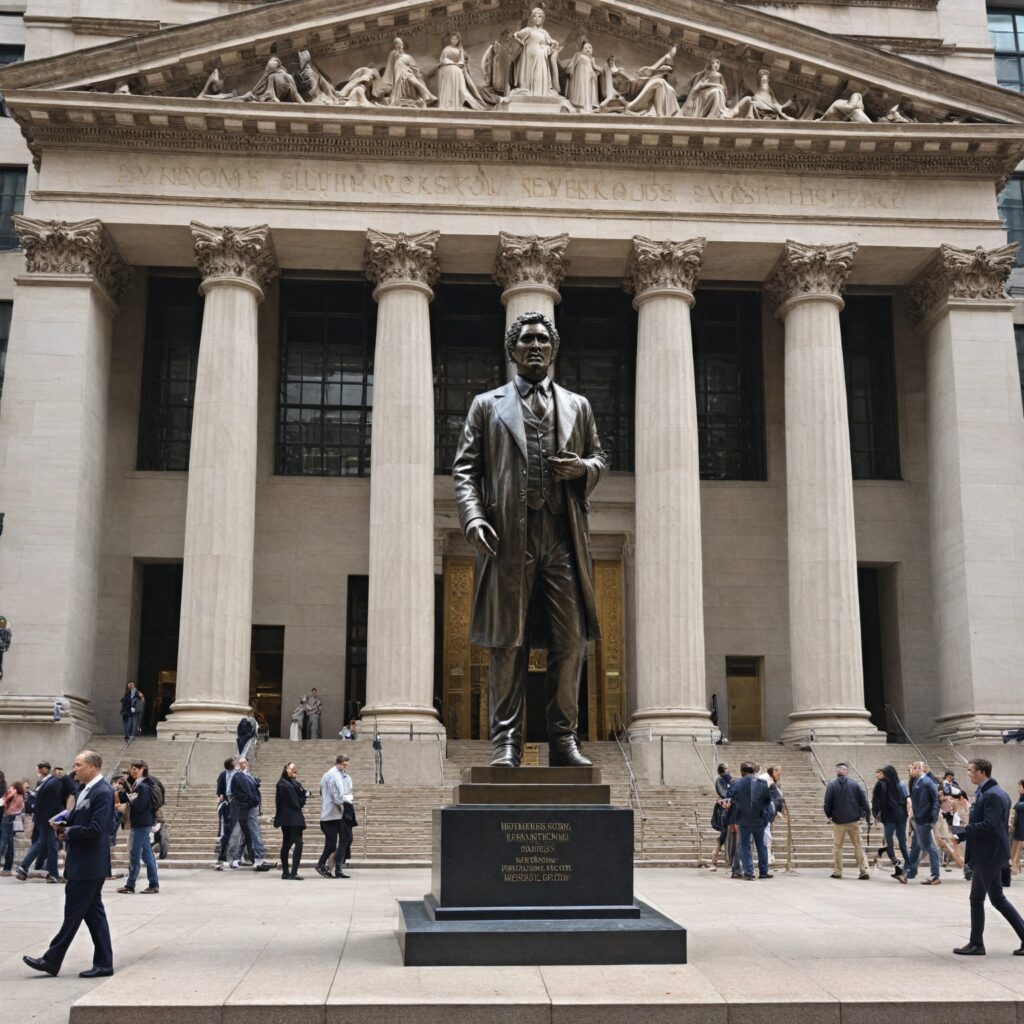
The New York Stock Exchange (NYSE) has recently become the new home for Valentina Picozzi’s “disappearing” statue of Satoshi Nakamoto, a notable sign of the evolving relationship between traditional finance and cryptocurrency. This event marks a significant departure from the prevailing skepticism towards digital currencies seen in years past, demonstrating a growing acceptance of cryptocurrency within the world of conventional investing.
In a post shared on X, the NYSE referred to the installation as a “shared ground between emerging systems and established institutions.” This acknowledgment of cryptocurrency indicates a shift in mindset as Wall Street embraces the possibilities associated with digital assets. The statue was introduced by Bitcoin-focused company Twenty One Capital, which also began trading this week, showcasing the intersection of art, finance, and digital innovation.

In her remarks, Picozzi expressed her astonishment at the statue’s placement in such a prominent location, emphasizing the significance of showcasing a figure like Satoshi Nakamoto at the NYSE. This momentous occasion coincides with the anniversary of the Bitcoin mailing list, which Nakamoto initiated on December 10, 2008, underscoring the long journey that Bitcoin has made since then.
Bitcoin’s Transformation: From Concept to Credibility
Bitcoin’s origins trace back to Satoshi Nakamoto, who mined the first-ever Bitcoin block, known as the genesis block, on January 3, 2009. This pivotal moment not only marked the beginning of cryptocurrency but also laid the foundational stones for the rapidly evolving digital economy. The first commercial transaction involving Bitcoin occurred on May 22, 2010, when programmer Laszlo Hanyecz purchased two pizzas for a staggering 10,000 Bitcoins, a testament to how far Bitcoin has come since its debut.
For many years, Bitcoin and the broader cryptocurrency sphere experienced adversity, facing skepticism and resistance from traditional financial institutions and regulatory bodies. Initiatives like Operation Chokepoint 2.0 hinted at government attempts to limit the advancement of digital currencies. However, over time, attitudes began to shift, and laden skeptics, including notable financial figures like BlackRock’s CEO Larry Fink, began recognizing the potential of cryptocurrencies. Consequently, major players on Wall Street have made significant investments in Bitcoin through exchange-traded funds (ETFs) and direct purchases, collectively holding over 3.7 million Bitcoin worth more than $336 billion.
Art as a Bridge: Reflecting on Future Possibilities
Picozzi has previously installed five Nakamoto statues across the globe in locations such as Switzerland, El Salvador, Japan, Vietnam, and Miami, with plans for a total of 21 statues, possibly reflecting the capped supply of 21 million Bitcoins. These statues serve not only as artistic expressions but also as homage to the enigmatic figure of Satoshi Nakamoto and the innovative spirit driving the Bitcoin ecosystem. Picozzi, through her Satoshigallery, articulates her vision of crafting a narrative around Nakamoto’s legacy, inviting viewers to contemplate the intricate layers surrounding this mysterious persona.
The statue embodies a deeper message about the often unseen innovators within the crypto space, thus contributing to the broader conversation about transparency and freedom in financial systems. The portrayal of Nakamoto in a relaxed pose with a laptop serves as a tribute to developers, programmers, and all those who have contributed to the emergence of cryptocurrencies, challenging convention and redefining the fabric of economic exchange.
As we continue to witness the intertwining of art and finance, the enduring impact of the Nakamoto statue installations invites us to ponder profound questions about the future of money, investment philosophies, and the artistic expressions entangled with these themes. How will additional installations affect perceptions of cryptocurrency in financial hubs around the world? Will the integration of art into the financial dialogue continue to reshape institutional attitudes towards blockchain and digital assets?
In summary, the placement of Satoshi Nakamoto’s statue at the NYSE not only signifies a monumental cultural shift but also reiterates the growing acceptance and embrace of cryptocurrencies in mainstream finance. This unfolding narrative raises several possibilities: What might the next ten years of cryptocurrency evolution look like? How can artists and financial institutions work together to enhance understanding of digital currencies? With the merging of traditional and emerging systems, the dialogue around digital assets is likely just beginning.
Editorial content by Harper Eastwood