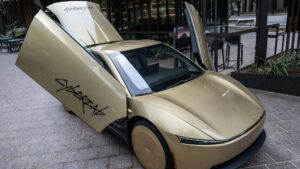
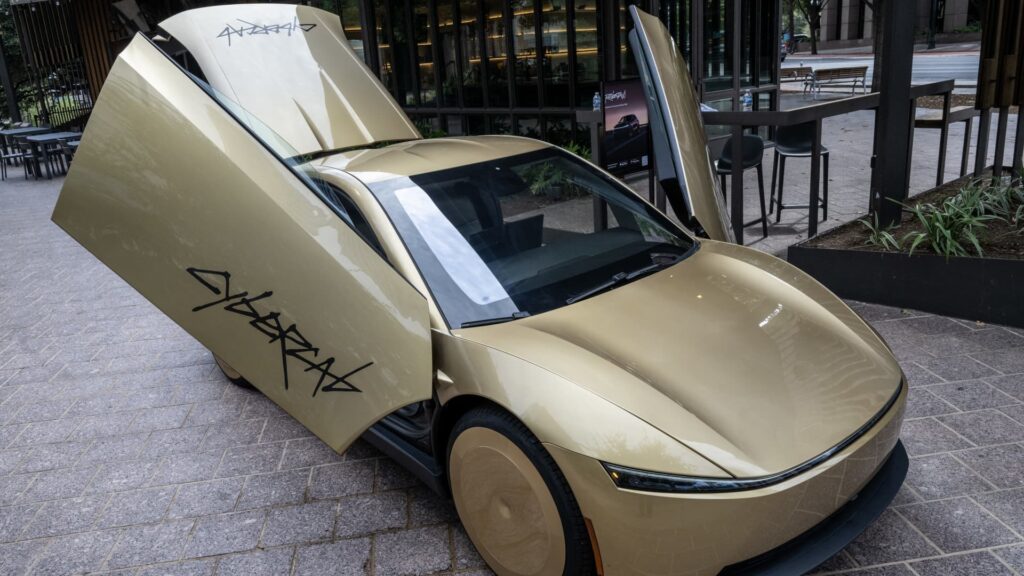
A Tesla’s “Cybercab” is displayed in downtown Austin, Texas, on September 3, 2026.
Ronaldo Schemidt | Afp | Getty Images
In just a month since the launch of Tesla’s Cybercab service in Austin, Texas, the company has seen a significant expansion of its fleet, with the number of its driverless two-seaters authorized for commercial use growing rapidly. As CEO Elon Musk seeks to foster greater investor optimism and rekindle demand, Tesla’s focus on enhancing its driverless technology and scaling its Robotaxi service is paramount.
The Cybercabs, which are notable for their lack of traditional driving features like steering wheels and pedals, have generated mixed feedback from consumers. Many early adopters have shared their experiences online, highlighting issues such as prolonged wait times, incorrect pick-up and drop-off locations, and troubles with the vehicle’s innovative butterfly doors. As the automotive giant navigates the hurdles in driverless vehicle service, the performance of Cybercabs is closely monitored, especially in light of Tesla’s struggling sales and stock performance this year.

Tesla’s Cybercab fleet is adding vehicles at an unprecedented pace, rising from an initial 45 units when launched to 169 currently. However, the company operates solely in Austin, where it competes within an evolving landscape that includes the formidable presence of Alphabet’s Waymo, which has spread its autonomous service to 15 U.S. markets and has more than 1,000 vehicles on the road. The intense competition and a pressing need for Tesla to move beyond Austin frame the strategic context for its ongoing developments.
Notably, Waymo reported conducting over 500,000 paid rides weekly and boasts significant experience in the realm of autonomy, having completed over 270 million fully autonomous miles. In Austin, Tesla encounters a landscape of both opportunity and challenge, marked by regulatory scrutiny and technological assessment as the National Highway Traffic Safety Administration (NHTSA) audits the Cybercab’s compliance with safety standards.
Hurdles to Expansion
As Tesla looks toward expanding its Cybercab service beyond Austin, the challenges grow more complex. Growing demand for self-driving services has highlighted infrastructure and operational issues, coupled with growing regulatory oversight following the Cybercab launch. Tesla secured an extension to address NHTSA’s safety-related inquiries after the initial deadline, indicating both the scrutiny and complexity surrounding autonomous vehicle regulation.
The ongoing transformation led by universities and individuals like Ethan McKanna, who has developed a data-tracking platform for robotaxi services, illustrates how consumer insights are crucial for tech adaptation. Users are voicing their experiences, which, although generally positive regarding ride quality, consistently point to operational glitches and delays that will need addressing to boost user confidence and encourage broader adoption.

Interestingly, no major incidents involving Cybercabs have yet been reported since their commercial debut. Nevertheless, concerns voiced by first responders about the vehicle’s design signify the critical importance of safety and emergency response capabilities as Tesla expands. Fire Captain Matt McElearney underscored the necessity for regulatory measures ensuring that autonomous vehicles incorporate manual overrides for emergencies, adding a layer of accountability that is essential for public safety.
Public sentiment remains a significant factor affecting Tesla’s potential success with its autonomous initiatives. Surveys reveal a notable apprehension among consumers, with a significant portion expressing discomfort regarding riding in vehicles lacking traditional controls. This suggests not only the technical challenges but also a psychological barrier that Musk and Tesla must address to foster consumer acceptance and drive the broader adoption of robotaxi services across new states.
Conclusion
In summary, Tesla’s rollout of the Cybercab service in Austin exemplifies both the potential and challenges associated with the advancement of autonomous vehicle technology. As the company endeavors to correct early operational shortcomings and negotiate the regulatory landscape, how it addresses consumer concerns will be pivotal. Will Tesla be able to transform mixed initial reception into a successful case for broader adoption? What measures will need to be taken to gain public trust, and how will regulatory frameworks evolve in support of autonomous vehicle deployment? These unanswered questions underscore the dynamic landscape in which Tesla operates, raising important considerations for the future of self-driving technology.
Editorial content by Jordan Fields