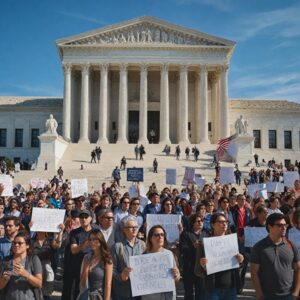
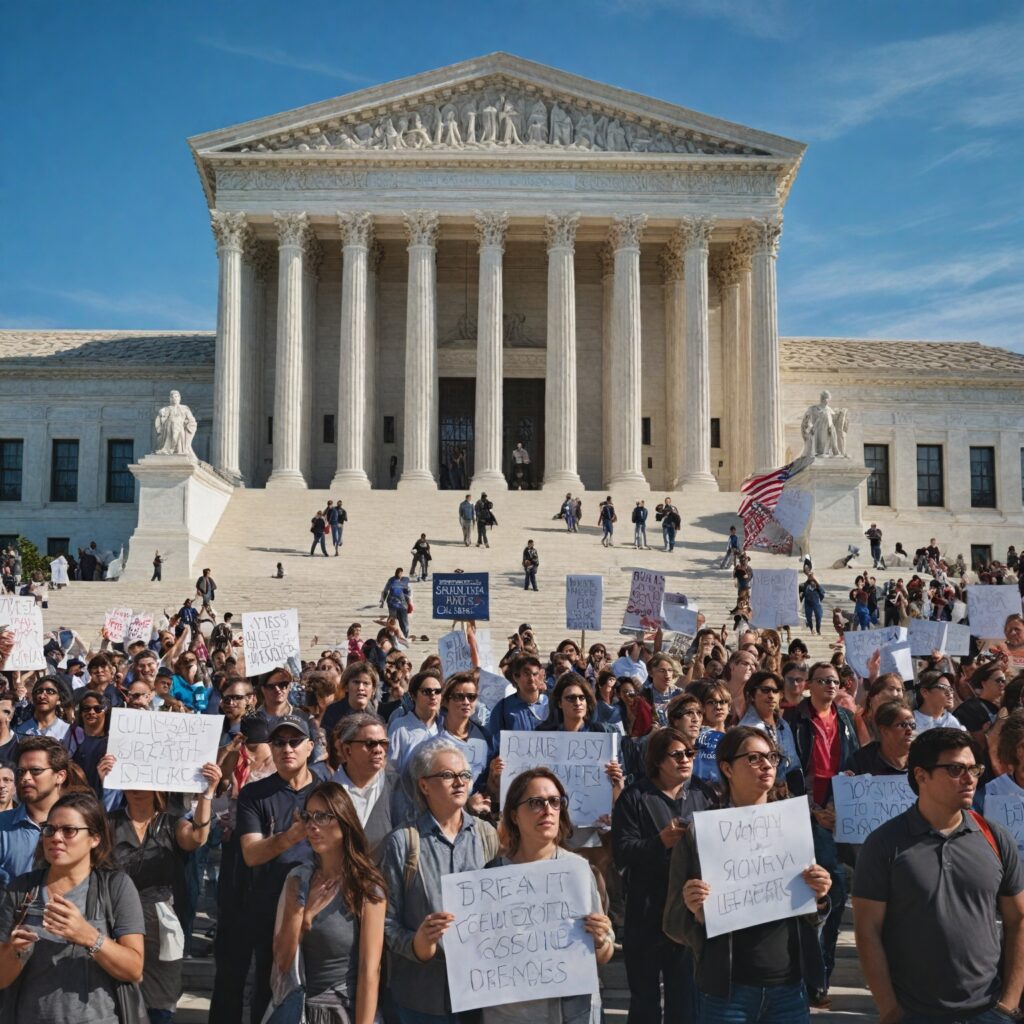
People hold a sign as they participate in a protest outside the U.S. Supreme Court over President Donald Trump’s move to end birthright citizenship as the court hears arguments over the order in Washington, May 15, 2025.
Drew Angerer | Afp | Getty Images
The Supreme Court has agreed to hear a crucial case that could redefine birthright citizenship in the United States. This case is a response to former President Donald Trump‘s executive order aimed at curtailing the citizenship rights for children born in the U.S. to undocumented immigrants and temporary visitors. As the nation watches closely, the court’s decision will hold significant implications for immigration policy and constitutional law.
On January 20, during his first day back in office, Trump issued the executive order declaring that children born to non-citizen parents more than 30 days post-order would no longer automatically receive citizenship. Historically, this has been provided by the 14th Amendment of the U.S. Constitution, which asserts that anyone born on American soil is granted citizenship, irrespective of their parents’ immigration status. The Citizenship Clause has stood as a cornerstone of American identity and rights, making this legal challenge particularly pivotal.
Legal Landscape and Core Challenges
The Supreme Court is set to deliberate on whether Trump’s executive order is in alignment with the longstanding interpretation of the Constitution’s 14th Amendment. This amendment enshrines the concept of birthright citizenship, stating unequivocally, “All persons born or naturalized in the United States, and subject to the jurisdiction thereof, are citizens of the United States.” Critics assert that Trump’s order not only contradicts this constitutional guarantee but also undermines a principle integral to the American ethos.
Several federal courts have already ruled against the executive order, citing it as unconstitutional. Judges from various district courts have issued injunctions that prevent the order from being enacted, emphasizing that it violates the rights protected under the 14th Amendment. The decision from the Supreme Court, expected next year, could either reinforce the existing legal framework or lay the groundwork for a controversial shift in how citizenship is administered in the United States.
Implications for Immigration and Citizenship
The outcome of this landmark case extends beyond just the legal aspects of birthright citizenship. It carries profound implications for countless families and individuals who rely on these protections as part of their rights in the United States. The potential alteration or revocation of such rights could exacerbate fears and uncertainties among immigrant communities and impact the broader narrative around immigration reform in the country.
As the nation awaits the Supreme Court’s ruling, discussions surrounding immigration policy and its future will likely gain momentum. Various stakeholders, including advocacy groups and policymakers, are gearing up to articulate their perspectives, hoping to influence the court’s decision or prepare for its consequences. There’s a growing conversation about potential alternatives and reforms that could ensure that the integrity of the 14th Amendment remains intact while addressing contemporary immigration challenges.