Highlights:
– Hyundai is experiencing rapid growth in the U.S. market, increasing its market share significantly despite a challenging auto industry landscape.
– The company is investing $26 billion into U.S. operations, aiming to produce 80% of vehicles sold in the U.S. domestically by 2030.
– Hyundai and Kia have transformed their brands from budget options to strong players in both affordable and luxury vehicle segments.
Introduction: Hyundai’s Bold U.S. Strategy
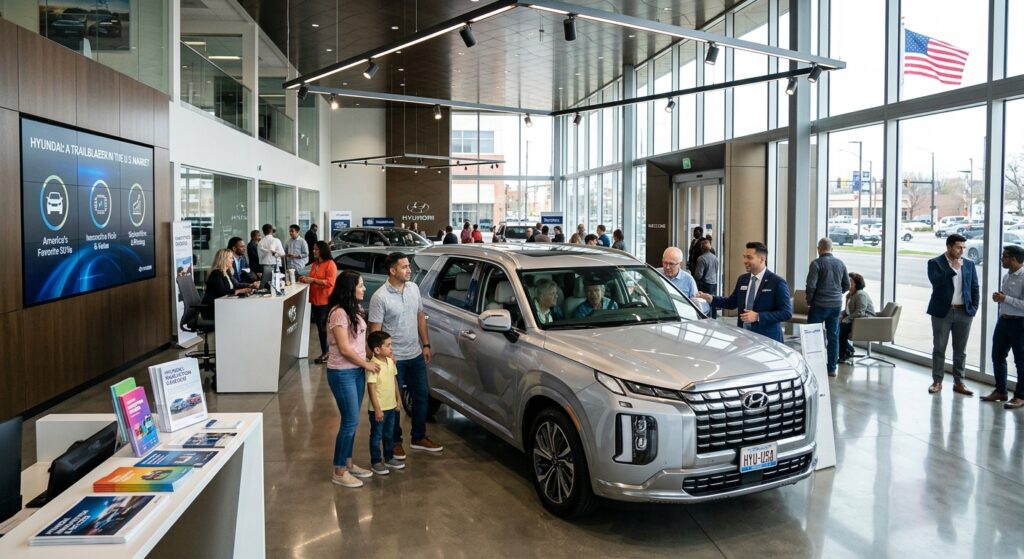
In a significant display of ambition, Hyundai Motor Co. is redefining its positioning in the U.S. auto market, aspiring to expand its reach and redefine consumer perceptions. Under the leadership of CEO José Muñoz, the South Korean automaker is channeling its efforts towards strengthened footholds in the competitive American landscape. Muñoz embodies the mantra “mueos-ideun ganeunghada,” meaning “anything is possible,” reflecting his own groundbreaking journey as the first non-Korean executive at the helm of the company.
Hyundai’s strategy includes ramping up production at a newly established $7.6 billion plant in Georgia. This facility is critical in capturing market share, especially as the U.S. automotive sector grapples with dramatic geopolitical shifts and an ever-evolving marketplace. Muñoz’s commitment to U.S. operations emphasizes this market’s pivotal role not only for company growth but also for its competitive edge globally.
Unprecedented Growth and Market Share Expansion
The figures speak for themselves: Hyundai Motor Group, which encompasses Hyundai, Kia, and Genesis brands, has significantly improved its market share in the U.S. over the past few years, rising from 8.4% in 2020 to approximately 11.2% in 2023. With sales spiking by 50% during this period, Hyundai has solidified its status as the fourth best-selling automaker in the country. Industry competition remains tough, yet Hyundai’s growth trajectory stands unmatched, with even notable rivals like Tesla showing limited market share increases.
The company’s performance positions it as the third best-selling automaker globally and the second most profitable by operating income. Investors, recognizing the potential, have responded positively, driving the company’s stock price on the Korea exchange up nearly 250% since 2020. As the automotive landscape shifts with transformations in consumer preferences and electrification, Hyundai’s proactive investments and competitive strategies lay a robust foundation for sustained future growth.
Vision for the Future: Localization and Luxury Transformation
Hyundai’s ambitious vision includes a projected $26 billion investment through 2028 aimed at making the Georgia Metaplant the largest vehicle assembly in the nation. Muñoz has outlined a goal of producing 80% of the vehicles sold in the U.S. domestically by decade’s end, a dramatic increase from the current 40%. This local manufacturing strategy is viewed as critical not only for boosting sales but also for accelerating Hyundai’s response to tariffs and evolving U.S. regulations.
Beyond just manufacturing, Hyundai and Kia are shifting their identities from economical options to comprehensive player—offering affordable models alongside premium vehicles. The launch of the Genesis brand and its luxury models, such as the new GV90 SUV, is a testament to this transformation. With continued innovations and the debut of over 100 vehicle launches anticipated by 2030, Hyundai aims to expand its reach across diverse market segments while enhancing its electrified vehicle lineup.
In summary, Hyundai’s strategic maneuvers in the U.S. market demonstrate a clear intent to balance rapid growth with consumer-centric approaches and ambitious goals for the future. As Hyundai forges ahead, what strategies will drive further market penetration, and how will the company respond to the shifting demands of an increasingly environmentally-conscious consumer base? Moreover, how will its competitors adapt to Hyundai’s swift advancements in both the affordable and luxury vehicle categories?
Editorial content by Jordan Fields