
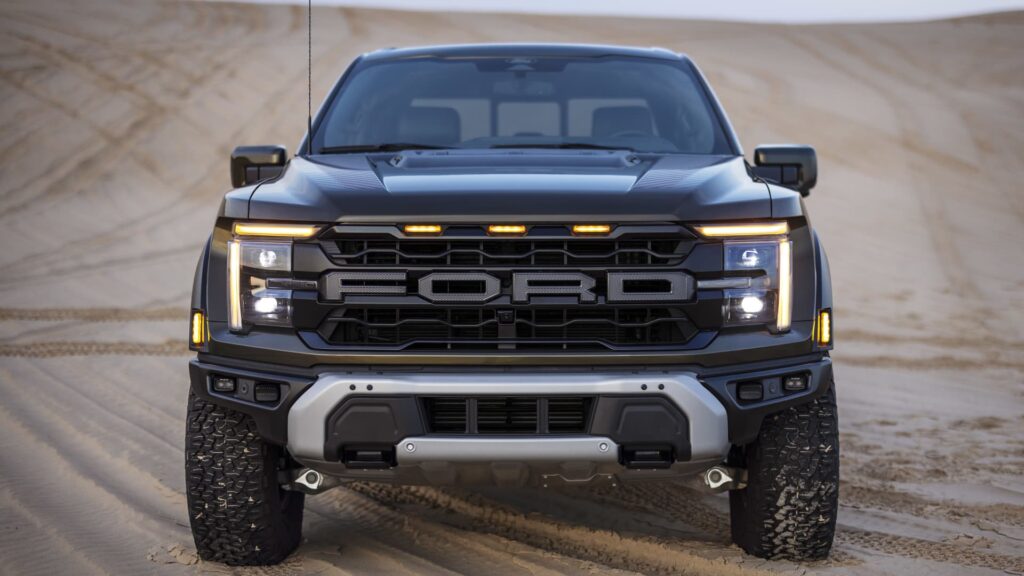
2024 Ford F-150 Raptor
Ford
DETROIT — Ford Motor is making significant changes to its 2027 F-150 lineup by expanding V-8 engine availability and reducing the starting prices for several performance models. This strategic move aims to enhance customer choices and boost sales, reflecting Ford’s initiative under CEO Jim Farley’s leadership. Amidst rising affordability concerns in the automotive market, these updates align with the broader trend of major automakers, particularly the Detroit Three, introducing more powerful V-8 engines following relaxed emission regulations.
The pricing adjustments are noteworthy given the context; the 2027 Ford F-150 Raptor will debut at $77,800, a reduction of $4,000 compared to the current model. Similarly, the 2027 Tremor will start at approximately $62,400, which is about $5,300 lower than last year’s offering. While the price cut is significant, Ford’s officials clarify that it does not mean a compromise on quality, as certain standard features like heated second-row seats are being omitted and some controls transitioned from electric to manual in order to accommodate these changes.
2027 Ford F-150 Carhartt model
Courtesy Ford
The heart of this transition revolves around the increased availability of the 5.0-liter V-8 engine across the entire F-150 lineup. For the first time since the 2023 model year, customers can now opt for V-8 engines in premium models such as King Ranch and Platinum, a change spurred by feedback from both customers and dealers. Todd Eckert, Ford’s senior director of truck consumer marketing, expressed that this decision aims to cater to consumer demand without sacrificing capability, thereby broadening the appeal of the F-150 lineup.
In addition to the enhanced engine options, the 2027 model year will introduce various style updates and a new Carhartt collaboration model, staying in tune with modern consumer preferences. These updates also come at a pivotal time when Ford is ramping up production to recover from the setbacks caused by supplier fires that heavily affected their aluminum-based truck production. This effort signals Ford’s commitment to returning to full strength in the competitive truck market.
Implications of Ford’s Strategic Shift
The ramifications of these changes extend beyond the immediate adjustments in pricing and engine availability. Ford’s commitment to expanding customer choices while addressing affordability can yield long-term benefits by making the F-150 accessible to a wider audience. This approach is not just about the electrification trend but also about staying relevant in a marketplace where customer preferences are evolving rapidly. Offering V-8 options in premium models demonstrates Ford’s willingness to adapt in response to consumer insights.
Furthermore, this push signifies a broader industry trend as automakers are compelled to find ways to enhance value amid increasing costs and changing regulations. With competitors also striving to navigate the transitions toward more sustainable yet powerful offerings, Ford’s moves could encourage innovation in truck manufacturing and design. Prioritizing affordability while maintaining performance is a balancing act that could prove crucial in retaining market share.
Conclusion
In summary, Ford’s significant adjustments to its 2027 F-150 lineup reflect a strategic pivot towards greater consumer appeal amidst growing affordability concerns in the automotive industry. By expanding V-8 engine offerings and introducing lower starting prices, the automaker aims to cater to both traditional and emerging truck consumers. These developments not only highlight Ford’s responsiveness to market dynamics but also suggest a competitive landscape where adaptability and innovation will be key in future vehicle offerings.
As these changes take effect, what will be the broader implications for the truck market? How will consumer priorities evolve in the aftermath of these shifts? And what other strategies might Ford employ to retain its competitive edge?
Editorial content by Sierra Knightley