
Jared Kushner, left, and Steve Witkoff, Special Envoy for Peace Missions listen as Vice President JD Vance speaks during a news conference after meeting with representatives from Pakistan and Iran, April 12, 2026 in Islamabad, Pakistan.
Jacquelyn Martin | Getty Images
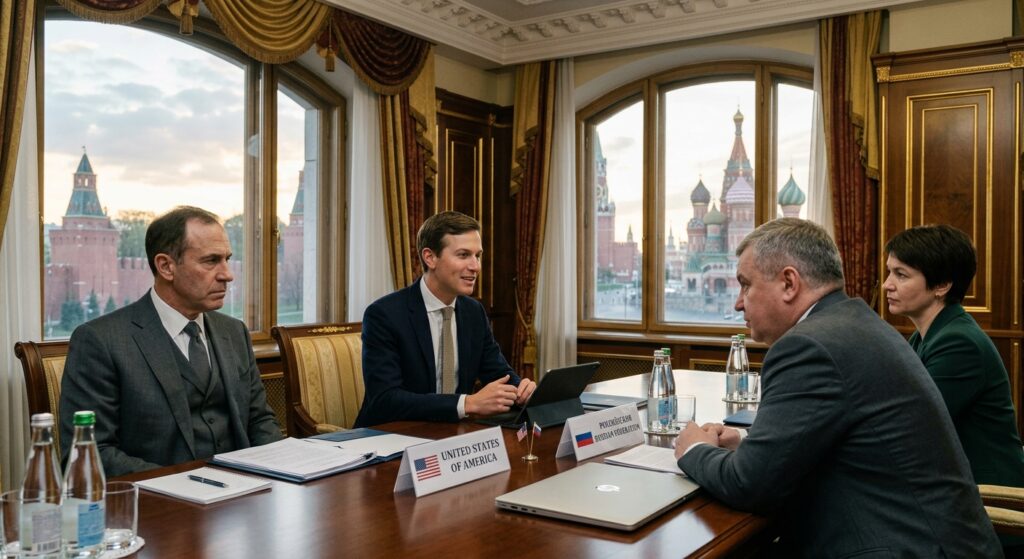
A high-stakes visit to Moscow by U.S. envoys Steve Witkoff and Jared Kushner aims to reignite peace talks surrounding Russia’s ongoing invasion of Ukraine. This diplomatic mission comes at a time when the conflict has escalated, causing immense human and infrastructural suffering in the region. As they navigate through the complexities of international negotiations, the question arises: can diplomacy still overcome a situation marked by increased hostility and violence?
The visit, taking place amidst intensified aerial assaults from both sides, underlines the urgency of finding common ground as civilian lives continue to be devastated. While reports indicate that Ukrainian President Volodymyr Zelenskyy called for a pause in airstrikes during the envoys’ trip, the lack of a response from Moscow indicates a tense stalemate. The significance of this meeting extends beyond the immediate conflict; it reflects broader geopolitical dynamics and the role of outside powers in regional disputes.
Escalation of Airstrikes Amid Diplomatic Efforts
As the air war surges in intensity, both Ukrainian and Russian forces find themselves increasingly engaged in aerial bombardments along a vast and contested front line of 1,250 kilometers. Ukrainian cities have become accustomed to the sound of air-raid sirens as they grapple with an unrelenting onslaught of attacks. President Zelenskyy recently highlighted the timing of the Russian strikes on key Kyiv targets, suggesting they were a direct response to the U.S. diplomatic efforts, further complicating the atmosphere for peace.
Underlining this cycle of violence, Russian drone attacks have specifically targeted critical infrastructure, including Kyiv’s international airports, while Ukrainian strikes have been directed at military bases and logistical hubs deep within enemy lines. This tit-for-tat escalation exemplifies the perilous nature of modern warfare where civilian casualties and infrastructural damage escalate alongside military objectives, raising questions about the sustainability of such a strategy for both sides.
Human Costs and Future Implications
The continued bombings have resulted in tragic losses, including recent strikes that killed and injured workers at an industrial site in Ukraine’s Dnipropetrovsk region. This reality of conflict highlights the human cost of warfare, where innocuous professions become targets, shattering lives and communities. Furthermore, reports of drone strikes in residential neighborhoods bring home the grim reality that the consequences of war extend far beyond the battlefield.
As diplomatic efforts seem increasingly critical yet fraught with challenges, the international community is left pondering the way forward. The ongoing hostilities not only raise questions of immediate safety and territorial integrity but also highlight the need for robust frameworks to manage conflicts peacefully. Solutions must encompass not just ceasefires, but comprehensive agreements that address underlying grievances and ensure long-term stability in the region.
Conclusion
In the ongoing quest for peace in the volatile Ukraine conflict, diplomatic engagement faces increasing hurdles amid a backdrop of intensified violence. As U.S. envoys work to revive stalled discussions with Russia, the heavy toll on civilians continues to mount. Given this context, what steps can be taken to ensure effective conflict resolution? How can international actors promote a sustainable peace while addressing the legitimate concerns of both sides? The answers to these questions will be critical for the future of Ukraine and the broader international community.
Editorial content by Blake Sterling