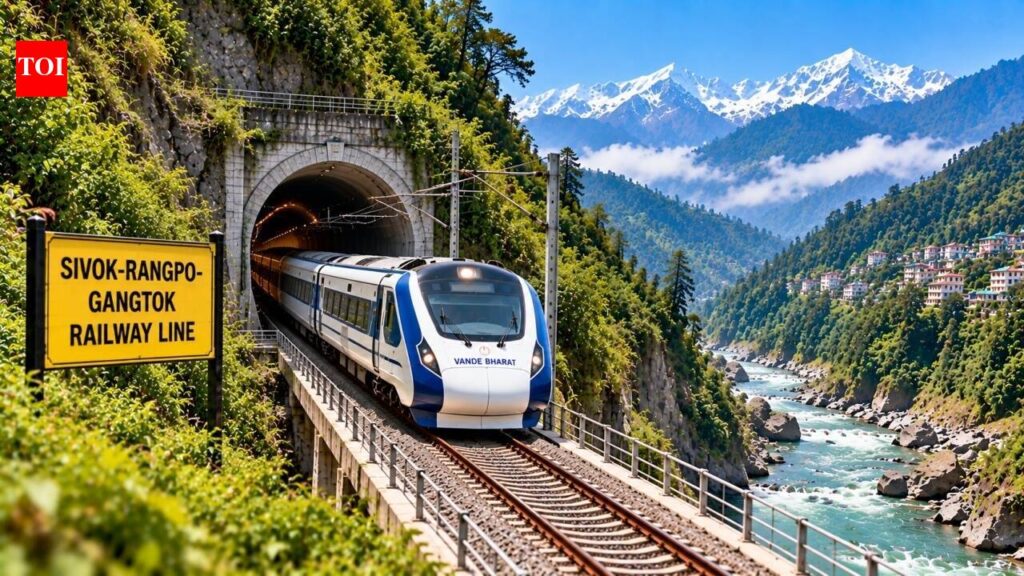
Sikkim is on the brink of a major connectivity revolution, as the Indian Railways intensifies efforts to integrate the state into the national rail network. A pivotal aspect of this initiative involves the proposed 34-km Rangpo to Gangtok rail link, which aims to connect the state’s capital to the railway system for the first time. With an investment estimated at around Rs 9,000 crore, this ambitious project underscores the growing emphasis on improving infrastructure connectivity across India.
The current focus is on the Sivok-Rangpo railway project, which is steadily progressing towards completion by December 2027. This 44.5-km line aims to establish Sikkim’s inaugural direct railway link, overcoming significant geographical challenges posed by the Himalayan landscape. Notably, this endeavor has necessitated the construction of multiple tunnels and bridges, making it a remarkable feat of engineering. The successful realization of both the Sivok-Rangpo and Rangpo-Gangtok lines will not only facilitate easier access to Gangtok but also significantly boost the region’s tourism and trade prospects.
Strategic Importance of Rail Connectivity
The ongoing Sivok-Rangpo project is more than just a transportation initiative; it represents a lifeline for the remote northeastern state. With the railway connection expected to cover 41.55 km in West Bengal and 3.41 km in Sikkim, the project encompasses an unprecedented 14 tunnels and 13 major bridges, utilizing deep underground tunneling methods to navigate through challenging terrain. With about 75% of physical progress made on the project, railway officials are confident of a timely completion.
This expanded railway network is vital for connecting the northeastern state capitals, marking a pivotal step forward in enhancing regional connectivity. Currently, only four northeastern state capitals have railway access; the completion of the Sivok-Rangpo line, along with the proposed Rangpo-Gangtok extension, will place Sikkim among these states, addressing long-standing connectivity issues for both residents and visitors. The Gürke-Gangtok extension, backed by the Integrated Multimodal Network Planning Group under the PM GatiShakti National Master Plan, shows the central government’s commitment to infrastructure development in hilly terrains.
Broader Implications for Sikkim
The impact of these developments extends far beyond mere transportation. With the railway expected to make the delivery of essential goods more reliable and efficient, it opens avenues for improved economic stability and the eventual growth of industries in Sikkim. Furthermore, the ease of travel will undoubtedly enhance tourism, a significant contributor to the state’s economy. As railway access improves, the potential for increased footfall in Sikkim’s notable tourist spots could lead to a revitalization of local businesses.
The completion of the Sivok-Rangpo line and the prospective Rangpo-Gangtok link could also stimulate a cascading effect across various sectors, such as transportation, hospitality, and local crafts. The anticipated establishment of long-distance train services connecting Sikkim to major cities will represent a leap forward for residents and tourists alike. Essential commodities, tourism, and economic activities in Sikkim are expected to see considerable growth, promising a brighter future for the state and its inhabitants.
In conclusion, the transformation of Sikkim into a railway-linked state heralds a new era of connectivity and economic opportunity for the region. It emphasizes the importance of infrastructural development as a foundation for progress. What challenges remain in realizing this project fully? How will this new connectivity shift the socio-economic landscape of Sikkim? Lastly, what lessons can be learned from this endeavor for future infrastructure projects in difficult terrains?
Editorial content by Harper Eastwood