Highlights:
– The U.S. is urging countries to choose sides in the AI race, emphasizing a split between U.S. and Chinese frameworks.
– The Pax Silica initiative aims to secure critical supply chains and technology partnerships amidst growing tensions.
– Kazakhstan’s dual membership in both U.S. and Chinese initiatives raises concerns within Washington.
Rising Tensions in the AI Race
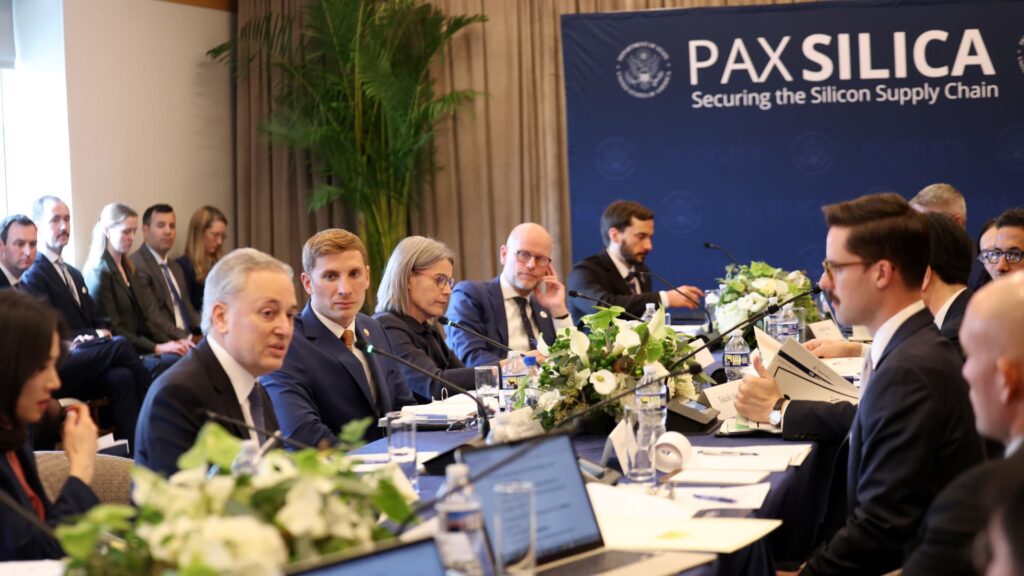
As artificial intelligence (AI) evolves into a cornerstone of technological advancement, the geopolitical implications surrounding its development are becoming increasingly pronounced. The recent convening of the Pax Silica Summit, orchestrated by Undersecretary of State Jacob Helberg, marks the beginning of a strategic initiative designed to bolster economic security through a collaborative network focused on the AI landscape. This summit, held at the Donald J. Trump Institute of Peace in Washington, D.C., on December 12, 2025, represents the U.S. government’s proactive efforts to establish a cohesive front against rival powers, particularly China.
Since the launch of the Pax Silica initiative last year, the U.S. has sought to secure essential supply chains in semiconductors, AI models, and critical minerals. As geopolitical rivalries intensify, the stakes are high; the U.S. is not only safeguarding its technological edge but is also vying for influence over a global AI ecosystem that could determine the future of power dynamics and economic dominance.
Divided Alliances in Global AI Efforts
At the core of the U.S. strategy is an explicit push for nations to commit to either the Pax Silica framework or China’s competing initiatives. The U.S. has prepared a letter for the 35 signatories of its “AI Opportunity Statement,” emphasizing that participation in conflicting frameworks undermines the integrity of partnerships. Kazakhstan’s unique position—holding membership in both the U.S.-led Pax Silica and China’s World Artificial Intelligence Cooperation Organization—has raised alarms in Washington, prompting the U.S. to articulate its stance on exclusive collaboration in the AI sector.
Amidst this, the rapid advancements made by China’s AI models pose a formidable challenge to the U.S. narrative of technological superiority. As the Chinese government evaluates restrictions on access to its AI technologies, the landscape is becoming murkier. U.S. officials stress that countries attempting to position themselves across both rival initiatives face credibility issues; aligning with China’s vision compromises their reliability as partners in U.S.-led technological ventures.
The Road Ahead: Consequences and Considerations
The ramifications of this fractured approach to AI alliances are profound. The Pax Silica framework not only promises enhanced investment opportunities in AI but also aims at reducing the dependency on adversarial nations for critical resources. As tensions escalate, the U.S. is attempting to reshape global technology partnerships, leveraging economic power to assert its leadership role. This raises essential questions about the long-term feasibility of a tech landscape divided along geopolitical lines.
As the U.S. encourages nations to make a definitive choice between its alliance and that of Beijing, the implications extend beyond technology; they touch upon economic interdependence, national security, and global collaboration. With each country’s decision reverberating through the global marketplace, stakeholders must consider not only their immediate benefits but the larger geopolitical consequences of their choices.
In conclusion, the evolving narrative surrounding AI alliances poses critical questions about the future of international cooperation in technology. How might nations balance their interests between competing powers? What compromises will countries be forced to make in this high-stakes race? And ultimately, will there be a unified global approach to harnessing AI’s potential for the greater good?
Editorial content by Sierra Knightley