
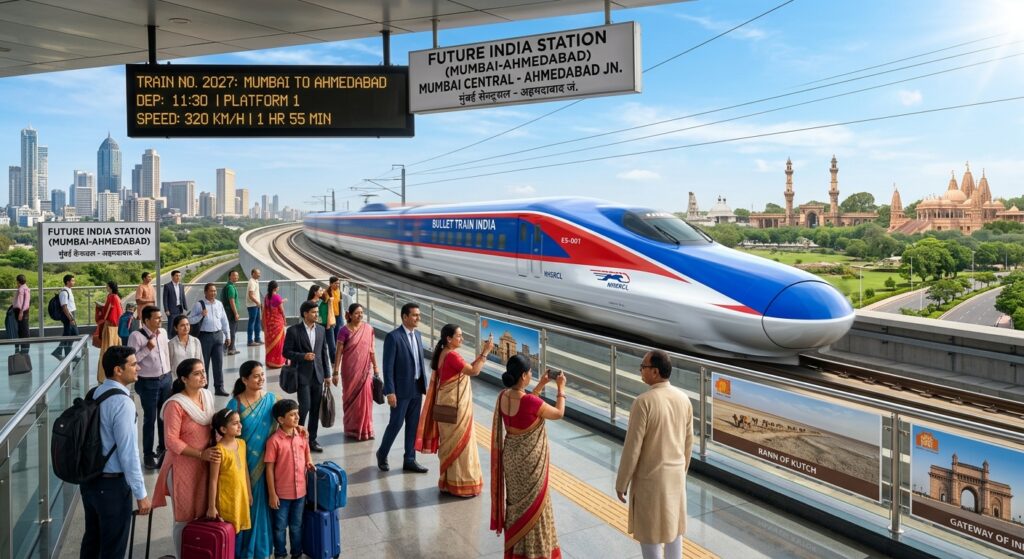
Highlights:
– India is set to launch its first bullet train service between Mumbai and Ahmedabad by 2027, with construction over 80% complete.
– The high-speed rail corridor will cover approximately 508 kilometers, significantly reducing travel time to about two hours.
– Plans are underway for seven additional high-speed rail corridors, expanding India’s rail infrastructure and enhancing connectivity.
India’s High-Speed Rail Ambitions: A New Era
India is on the precipice of a monumental transformation in its transportation infrastructure with the introduction of its first-ever bullet train service. Announced by Union Railway Minister Ashwini Vaishnaw, the Mumbai-Ahmedabad High-Speed Rail Corridor is projected to commence operations by 2027. This ambitious project marks not only the beginning of a new chapter in Indian rail travel but also symbolizes the country’s commitment to adopting advanced technology and enhancing connectivity in an ever-expanding economy. With construction surpassing the 80% completion mark, the nation eagerly anticipates the launch of this high-speed service.
The significance of the bullet train initiative extends beyond just faster travel; it encapsulates a vision for a more integrated and efficient transportation network that can spur regional development and economic growth. By adopting Japanese Shinkansen technology, the project aims to set a benchmark for future high-speed rail systems across India, demonstrating the feasibility of modern rail travel within the country. This venture stands to elevate India’s standing on the global stage regarding rail innovation.
Key Features of the Mumbai-Ahmedabad Corridor
The Mumbai-Ahmedabad corridor is a meticulously planned infrastructure project spanning approximately 508 kilometers. Notably, it is designed to transport passengers between the two bustling cities in roughly 1 hour and 58 minutes, radically cutting down current travel durations. The bullet trains will operate at a maximum speed of 320 kilometers per hour, with the capability to reach up to 350 kilometers per hour. This leap in speed exemplifies India’s move towards modern rail systems with enhanced efficiency and safety features.
Adding to the corridor’s revolutionary nature is the implementation of J-Slab ballastless track technology, the first of its kind in India. With over 20,000 overhead electrification masts and an extensive network of traction substations, the project is laying the groundwork for a robust high-speed rail infrastructure. As construction progresses with dedicated bases for the storage of rails and equipment, the establishment of three major rolling stock depots points to a comprehensive strategy that anticipates the immediate operational needs of this impressive rail network.
Next Steps and Future Implications
The Mumbai-Ahmedabad bullet train is merely the first piece of an expansive puzzle. The Indian government has identified seven additional high-speed rail corridors, potentially covering over 4,000 kilometers with an estimated investment of around ₹16 lakh crore. This long-term plan not only aims to enhance national connectivity but also to foster regional development and economic opportunity by linking major cities more efficiently.
The implementation of this high-speed rail network is expected to cultivate a knowledgeable workforce and stimulate the necessary industrial ecosystem for future expansion efforts. As India embraces this transformative project, questions arise about its long-term impact: What ripple effects will a high-speed rail network have on urbanization and economic patterns? How will this new infrastructure change the way Indians travel? The answers to these questions may reshape the landscape of Indian transportation for generations.
In summary, India’s first bullet train project is a significant leap towards modernizing the nation’s rail infrastructure, combining speed, safety, and efficiency. With the ambitious plans for additional corridors on the horizon, India is well-positioned to redefine its approach to railway travel. As the countdown to 2027 begins, what other innovations could we see in India’s transportation sector? How might these developments reshape daily commutes and regional growth?
Editorial content by Jordan Fields