
Highlights:
- 3D printing is revolutionizing automotive manufacturing by enabling cost savings and increased production speed.
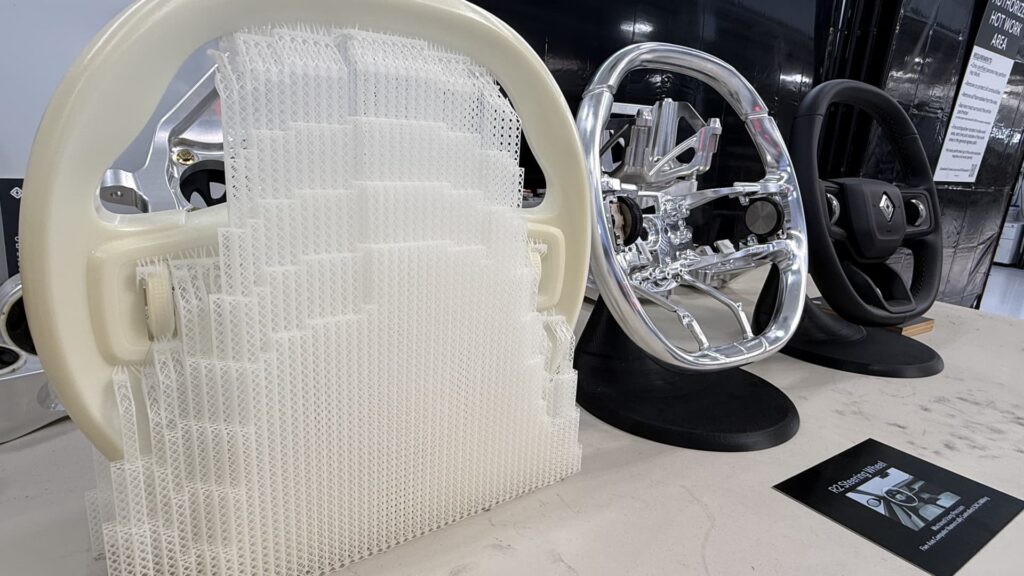
- Both established giants like Ford and newcomers like Rivian are leveraging additive manufacturing for components and tooling.
- The technology is projected to become more standardized and accessible across the automotive industry.
The Rise of 3D Printing in the Automotive Industry
In the ever-evolving landscape of automotive manufacturing, 3D printing has emerged as a game-changer for companies seeking efficiencies and innovations in production. Iconic automakers such as Ford and Rivian have recognized the potential of additive manufacturing, investing heavily in this technology to streamline processes and reduce costs. While 3D printing has been around for several decades, it is only now becoming a mainstream approach in the automotive sector, used extensively for creating not just car parts, but also tools and prototypes.
The significance of embracing 3D printing lies in its ability to drastically cut production times and costs. Manufacturers can now produce parts in a matter of days—if not hours—rather than weeks, demonstrating a critical advantage in meeting market demands efficiently. Jonathan Dankenbring, a senior manager at Rivian, stresses the importance of integrating 3D printing into every facet of their operations, stating, “We’re going to be democratizing 3D printing for the entire company.” Such a fundamental shift highlights the technology’s growing role in shaping the future of automotive manufacturing.
Core Benefits and Applications of Additive Manufacturing
Known for its capability to create three-dimensional objects from digital designs, 3D printing uses materials like plastics, metals, and ceramics, dispensing them layer by layer. This flexibility allows manufacturers not only to create custom parts but also to maintain a unique production rhythm that aligns with their operational needs. Rivian has invested over $5 million in 3D printing technology, with the ongoing operational costs for materials rising to approximately $1.7 million annually. Importantly, these investments are projected to pay for themselves within a year through various savings achieved in tooling and logistics.
Additionally, larger enterprises like Ford and General Motors are also harnessing the power of additive manufacturing to maximize efficiency. Ford’s implementation of vending machines in their factories allows staff easy access to precisely the parts and tools they need at a moment’s notice, while GM has leveraged 3D printing in developing distinct products for its performance vehicles. According to Ford mechanical engineer Gregory Foresi, “Creating the tools with 3D printing has allowed us to uniquely design them when needed, get them faster, and generally at a lower cost.” This agile process not only enhances production capacity but also fosters innovation in design and manufacturing methods.
The Future of 3D Printing in Automotive Manufacturing
The implications of 3D printing in automotive manufacturing extend well beyond immediate cost savings and efficiency gains. As the technology matures, it holds the promise of revolutionizing supply chain dynamics, making production lines more resilient and adaptable. Rivian is already pushing boundaries by expanding its 3D capabilities, including machines capable of creating flexible parts, which enhances their operational versatility. Ford anticipates that its 3D-printing labs will be in over 23 plants this year, pointing to a clear trend toward greater integration of this technology across automotive production systems.
Moreover, as companies continue to innovate, the standardization and accessibility of 3D printing technology will likely accelerate. Fadi Abro from Stratasys notes that companies like GM showcase how effective 3D printing can be in improving product design and operational efficiency. With advancements in material properties and printing capabilities, the automotive industry is set to experience transformative changes that might redefine traditional manufacturing paradigms.
In summary, 3D printing is rapidly transforming the automotive manufacturing landscape, offering the potential for enhanced efficiency, cost reductions, and innovative design possibilities. With both new entrants like Rivian and established giants like Ford and GM investing in this technology, the future looks promising for this sector. What implications do these manufacturing innovations have for sustainability in the industry? As 3D printing continues to evolve, how will it shape consumer expectations for customizability and delivery speed? And will we see further disruption in supply chain processes due to these advancements?
Editorial content by Jordan Fields