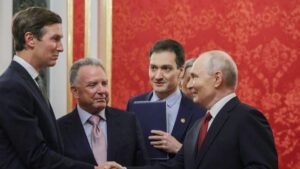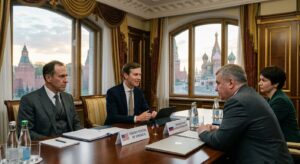
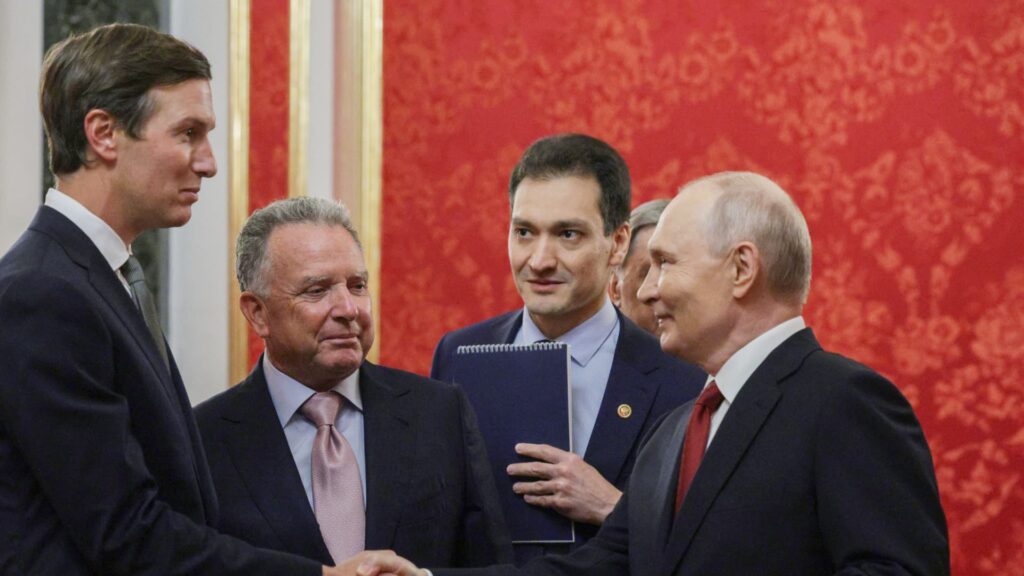
In this pool photograph distributed by the Russian state agency Sputnik, Russia’s President Vladimir Putin (R) welcomes US special envoy Steve Witkoff (2nd L) and US President Donald Trump’s son-in-law Jared Kushner (L) prior to their talks in Moscow on September 5, 2026. (Photo by Gavriil GRIGOROV / POOL / AFP via Getty Images) / Editor’s note: This image is distributed by the Russian state owned agency Sputnik
Gavriil Grigorov | Afp | Getty Images
In a crucial diplomatic engagement, Russian President Vladimir Putin recently met with U.S. envoys Steve Witkoff and Jared Kushner for over three hours, aiming to forge a path toward peace in the ongoing Ukraine conflict. This meeting, marked by significant dialogue, highlights the persistent tensions and challenges facing both sides in the quest for resolution. As the situation remains volatile, the international community keenly observes these interactions for potential shifts in strategy and outcomes.
The importance of this meeting cannot be overstated, as it signifies a possible willingness for dialogue amid the continuing strife. However, despite the lengthy talks, no concrete breakthroughs were reported, raising concerns about the feasibility of reaching a lasting agreement to end hostilities in Ukraine. As the conflict drags on into its second year, both Russia and Ukraine continue to suffer heavy losses, highlighting the urgent need for a resolution that addresses the complexities of the situation.
Insightful Discussions with U.S. Envoys
Putin’s discussions with Witkoff and Kushner were described as “substantive,” with an emphasis on exploring economic implications alongside the urgent issue of the Ukraine crisis. While details of the proposals brought forth by the American envoys remain undisclosed, they reflect a potential desire for collaboration on mutually beneficial projects, an avenue that might pave the way for a peaceful settlement. Kremlin aide Yuri Ushakov noted increased determination from Russia to address the “root causes” of the conflict, reaffirming Moscow’s steadfast stance regarding territorial aims.
Despite the optimistic tone from Russian officials, there remains a considerable divide between the two nations on how to progress towards peace. The ongoing violence highlights this disparity, with both sides escalating their military activities while the front lines barely shift. Analysts express skepticism about Russia’s claims of battlefield progress, with many believing that Ukraine’s resistance has proven formidable, complicating negotiations. The stakes are high, as every misstep in diplomacy can lead to further escalations in one of Europe’s deadliest conflicts since World War II.
Challenges and Possible Solutions
The gulf separating Russia and Ukraine extends beyond mere territorial disputes. With the ongoing military offensives and a firm commitment from both sides to secure their strategic interests, finding common ground remains complex. Ukrainian President Volodymyr Zelenskyy has reiterated a readiness to engage, yet he firmly stands against yielding territory. Meanwhile, Russian leadership shows no signs of backing off its demand for territorial concessions, further entrenching positions on both sides.
The road ahead remains fraught with obstacles, but continued dialogues like the recent one between Putin, Witkoff, and Kushner can serve as a foundation for potential pathways to peace. Constructive engagement may emerge through economic partnerships or humanitarian efforts, potentially mitigating the conflict. However, trust-building will be integral to any effective negotiations. Countries embroiled in such deep-rooted disputes must have a mutual commitment to stability and peaceful resolution to avert further suffering and loss of life.
Highlights:
– Russian President Vladimir Putin held discussions with U.S. envoys aiming to address the ongoing Ukraine conflict.
– The talks were noted as “substantive,” yet yielded no straightforward resolution amidst fluctuating military engagements.
– Diplomatic progress hinges on building trust and finding common interests, particularly concerning territorial disputes and economic collaborations.
In summary, the recent talks in Moscow indicate a fragile opportunity for dialogue, yet illustrate the profound challenges that persist between Russian and Ukrainian sides. With ongoing military actions and rigid stances complicating potential resolutions, one must consider: What avenues can be pursued for meaningful dialogue? How can both nations build the necessary trust to genuinely pursue peace? What role does the international community play in facilitating or hindering such talks?
Editorial content by Harper Eastwood